How We Turn Ocean-Bound Plastic Into Industrial-Grade rPET
Every batch of rPET resin pellets, PET flakes, and plastic wood lumber that leaves our facility in Masagua starts the same way: as plastic that would otherwise reach Guatemala's rivers and Pacific coast. Our Hot-Wash process converts that ocean-bound feedstock into verified, traceable, export-quality recycled materials for industrial manufacturers.
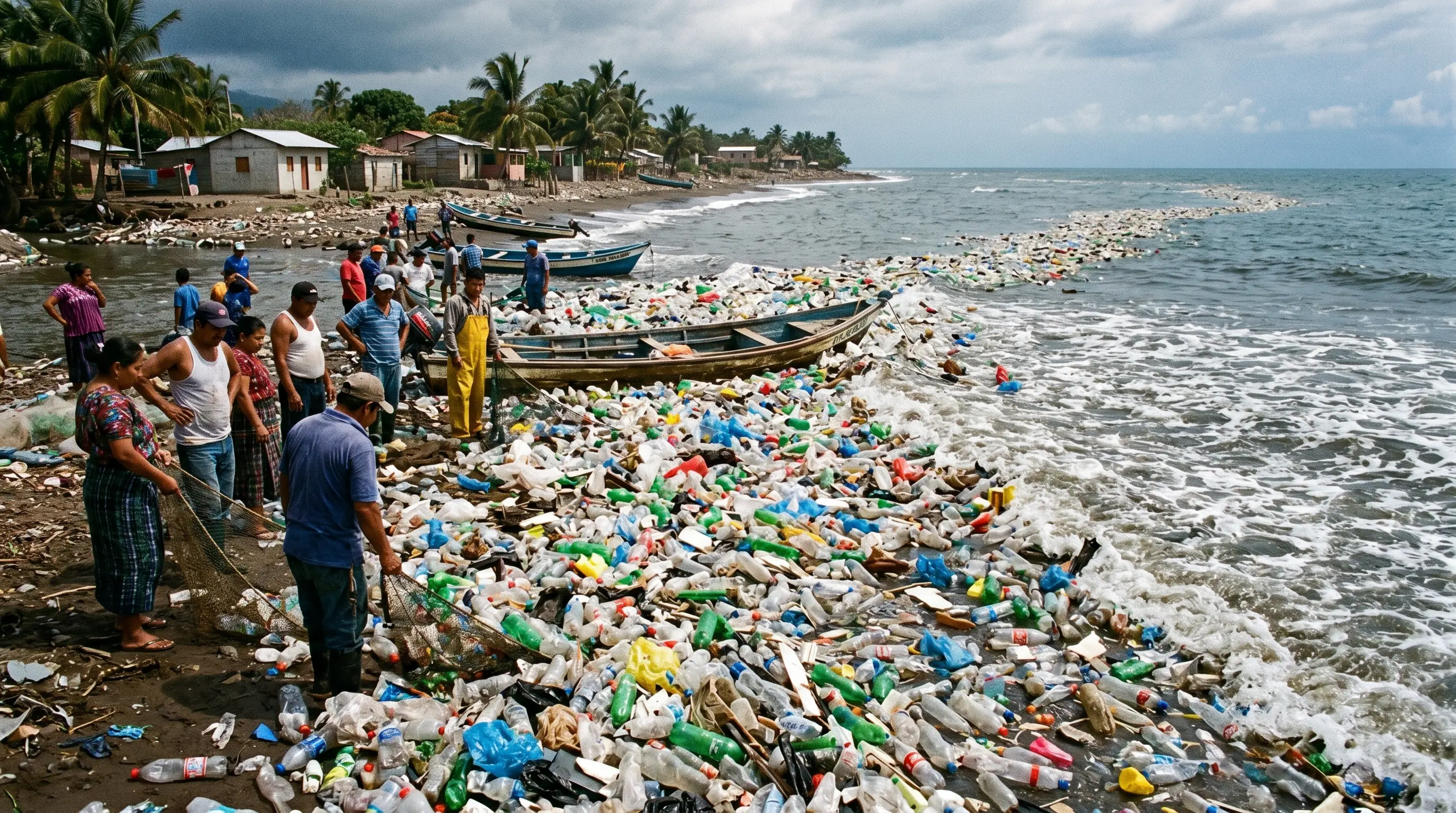
Ocean-Bound Plastic Collection
Raw material is collected from rivers such as María Linda and Paso Hondo, coastal recovery points in Puerto San José and Iztapa, and urban collector networks across Escuintla. Every kilogram enters a 100% Ocean-Bound supply chain, documented from collection point to final shipment.
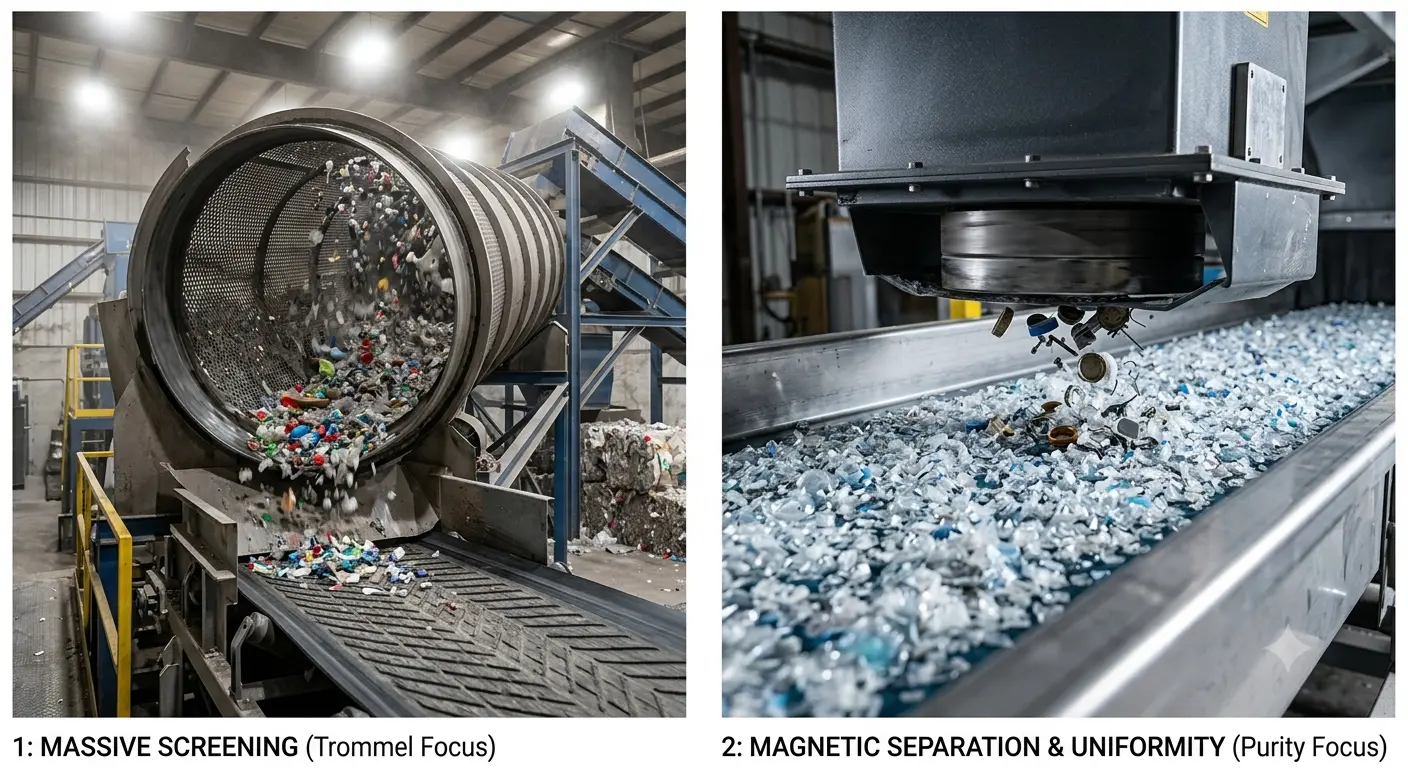
Mechanical Sorting & Size Reduction
Incoming bales are broken down and passed through trommel screening and magnetic separation to remove ferrous metals and non-target materials. Material is reduced to uniform particle size to maximize Hot-Wash efficiency and output purity.
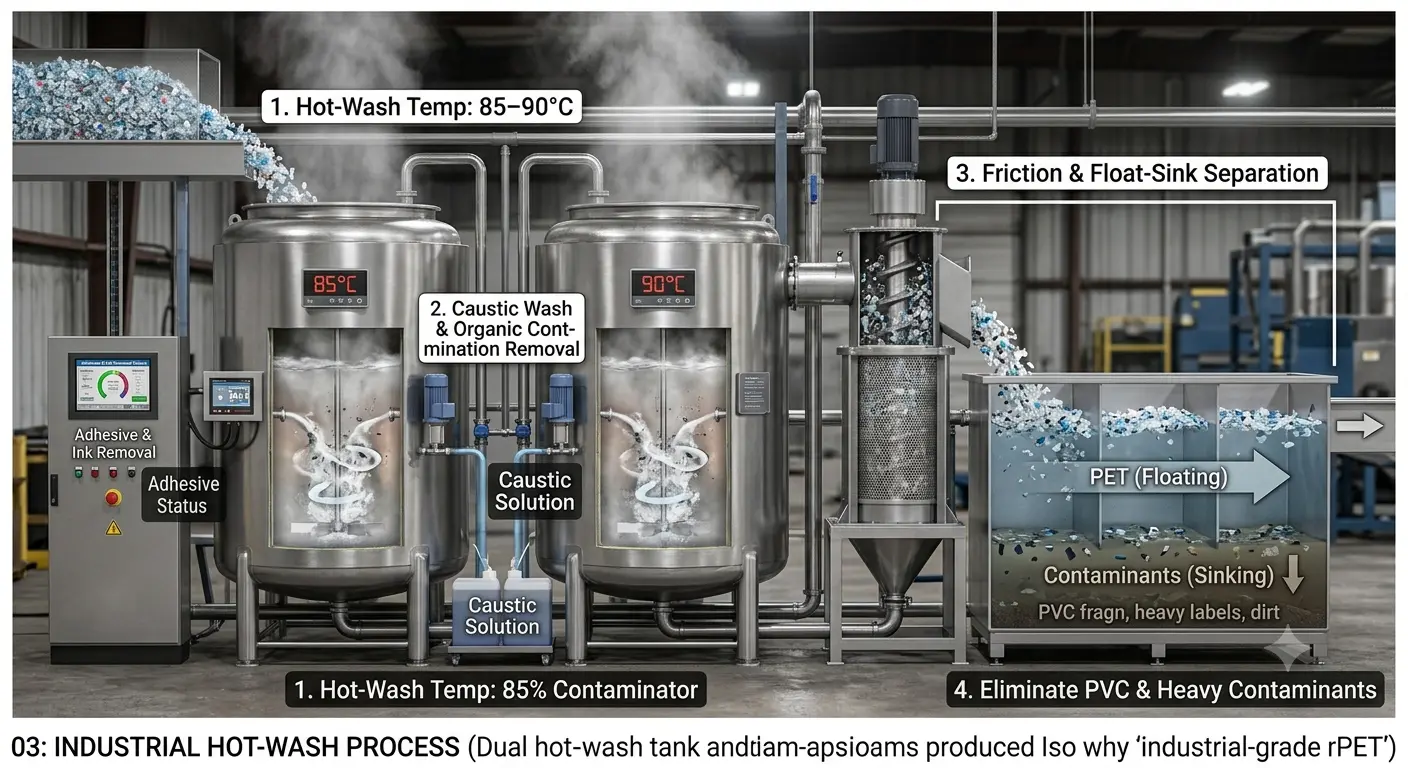
Industrial Hot-Wash Process
Dual hot-wash tanks operating at 85–90°C with caustic solution remove labels, adhesives, inks, and organic contamination. Friction washing and float-sink separation eliminate PVC and heavy contaminants. This stage is what separates industrial-grade rPET from standard cold-wash flakes.
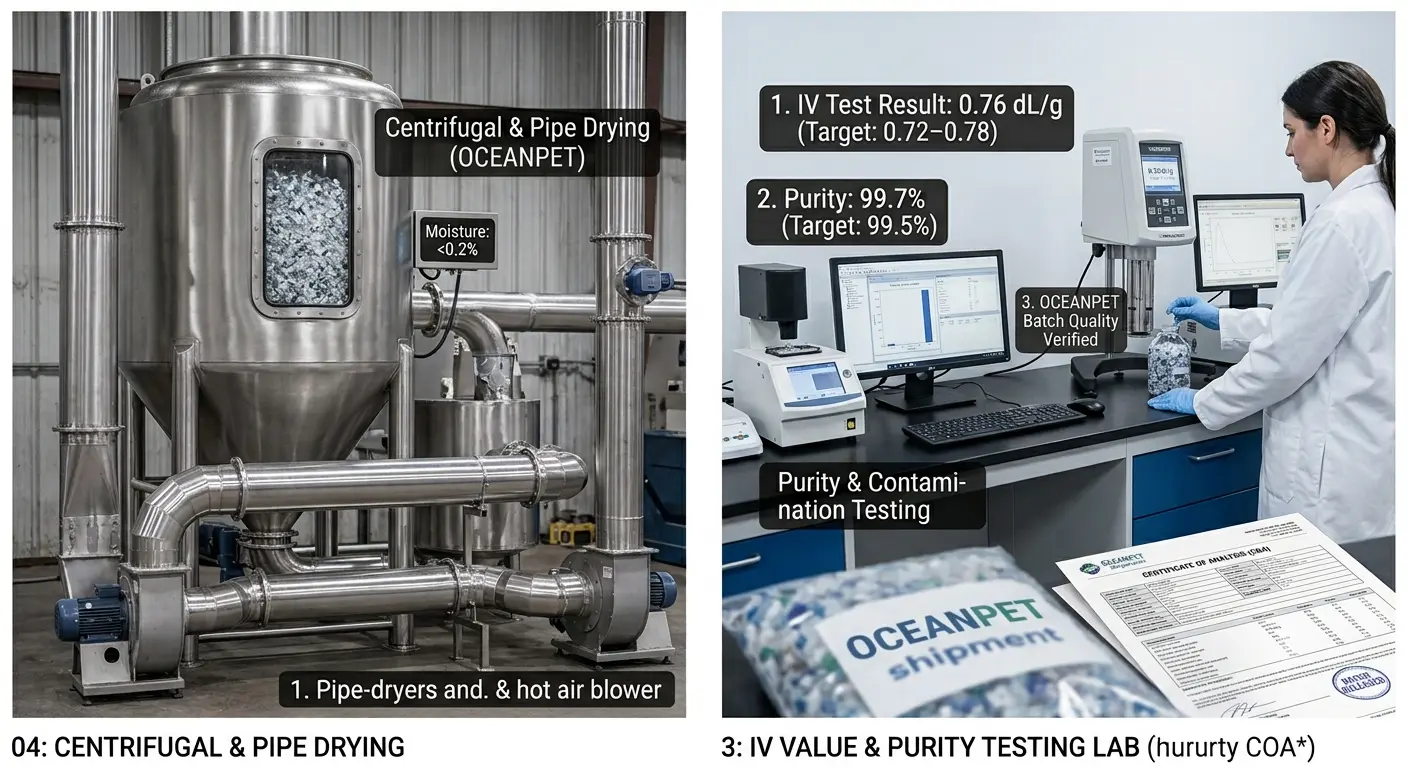
Drying & IV Quality Control
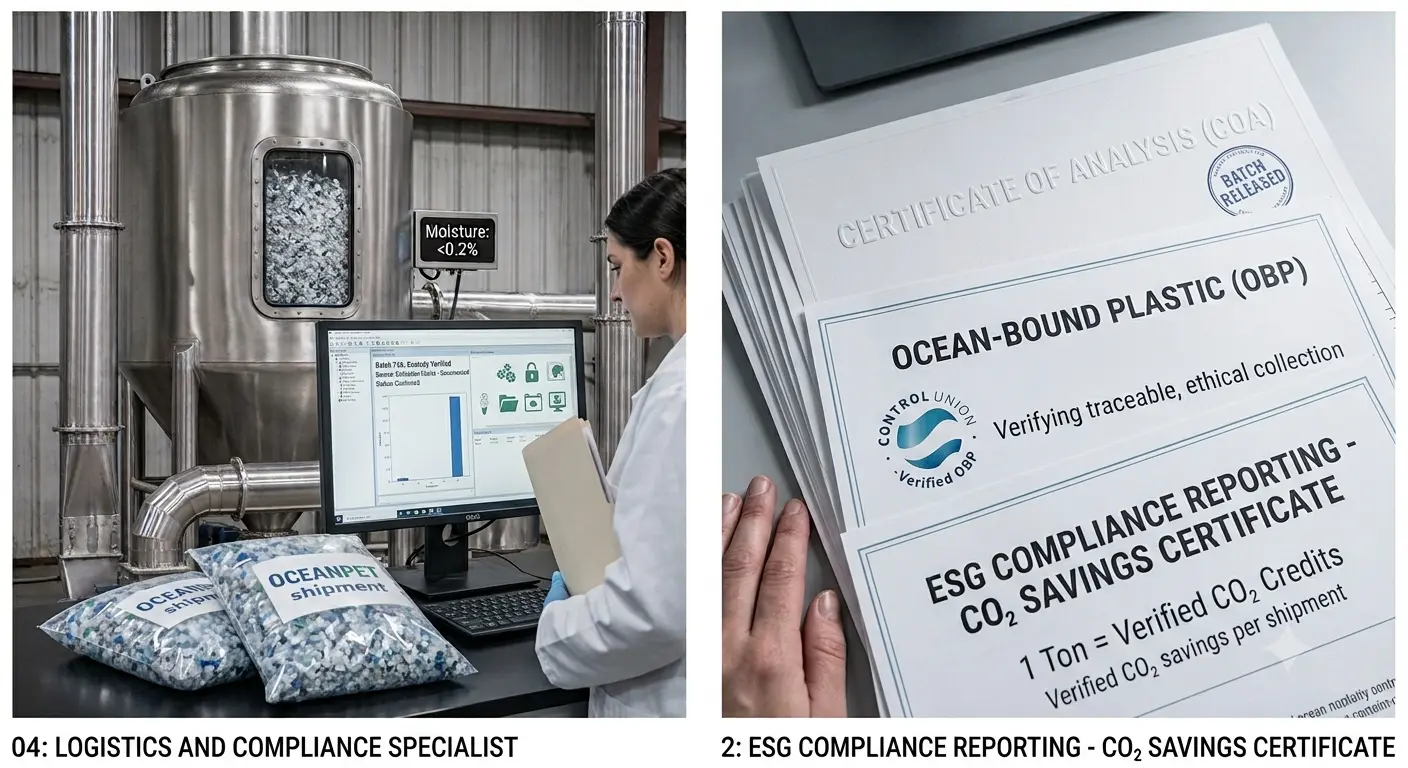
Centrifugal drying followed by pipe drying reduces moisture to below 0.2%. Every batch is tested for intrinsic viscosity (IV value 0.72–0.78 dL/g), purity (99.5%), and contamination levels before release. A Certificate of Analysis (COA) is issued per shipment.
Pelletizing Line
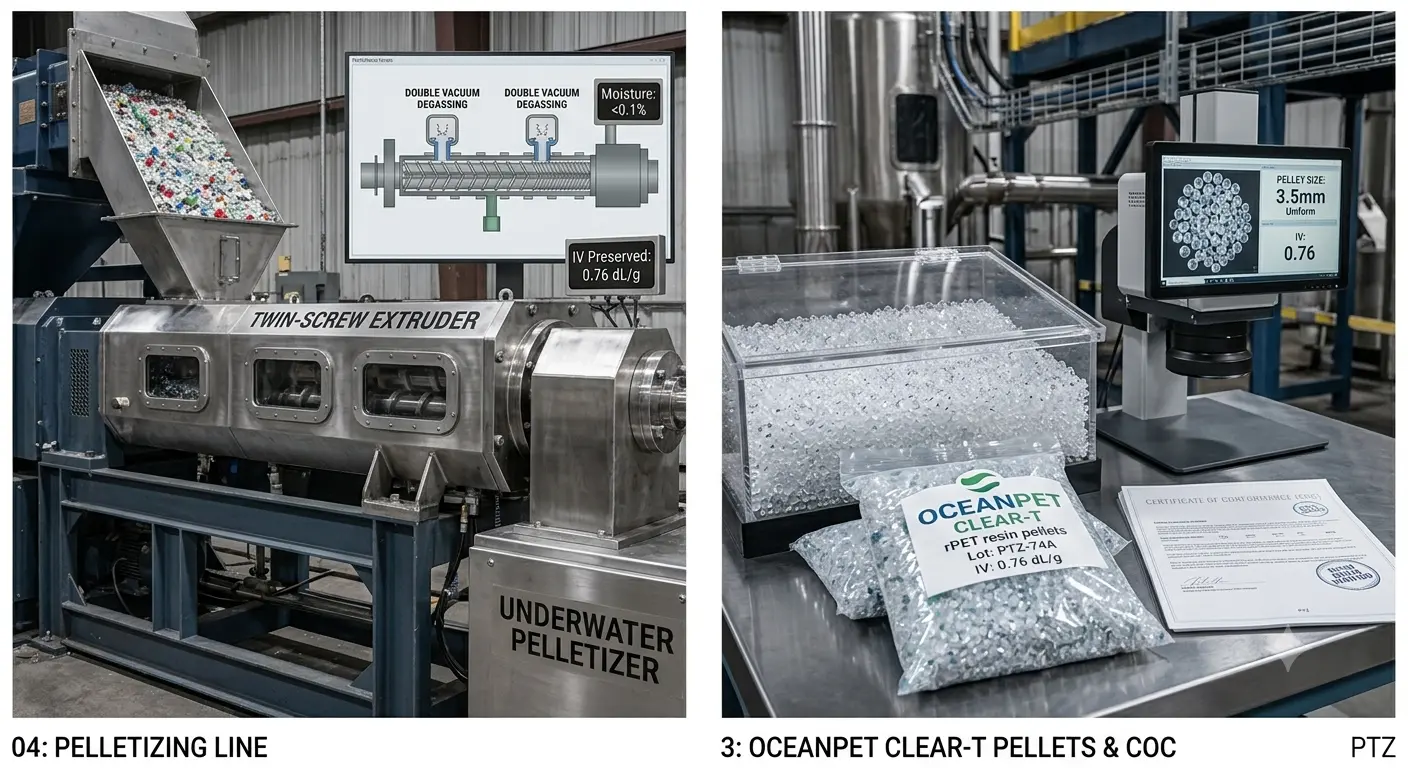
PET flakes are fed into a twin-screw extruder with double vacuum degassing to preserve intrinsic viscosity. An underwater pelletizer produces uniform spherical pellets of 3–4mm — OCEANPET CLEAR-T rPET resin pellets, consistent in size, density, and IV value for thermoforming and textile-grade applications.
Chain of Custody & OBP Plastic Documentation
Full traceability from collection point to final shipment. Chain of custody documentation is issued per batch. Ocean-Bound Plastic documentation is managed through Control Union. Every ton purchased includes a verified CO₂ savings certificate for ESG reporting.
Technical Specifications
| Parameter | Value |
|---|---|
| IV Value | 0.72–0.78 dL/g |
| Purity | 99.5% |
| Moisture | <0.2% |
| Pellet shape | Spherical 3–4mm |
| Bulk density | 0.78–0.85 g/cm³ |
| Certification | Ocean-Bound Plastic (OBP) |
| Production | Solar-powered |
| Grade | Industrial non-food |
| Output | Pellets + Flakes |
Learn More About Our Operations
Discover how we process ocean-bound plastic into high-value industrial materials.
*This section is designed as an evergreen editorial hub to support product education, search visibility, and long-term topical authority for OCEANPET.
Located Where It Matters
OCEANPET operates in Masagua, Escuintla, Guatemala — 45 minutes from Puerto Quetzal on the Pacific coast. Regional lead time: 1–3 days. Imported rPET: 25–40 days. rPet recycled resin pellets, flakes and plastic wood— in-situ customs clearance for export shipments.
Verified CO₂ Savings
1.55 ton CO₂ avoided per ton of rPET processed. Certificate issued per purchase.
Full Chain of Custody
OBP documentation per batch. Ready for ESG reporting and sustainability audits.
Solar-Powered Production
Facility operates with solar energy integration. Lower carbon footprint per ton produced.
OCEANPET is a different kind of PET recycler — one that starts where plastic ends up: in Guatemala's rivers and coastlines
As an industrial PET recycling company in Guatemala, OCEANPET converts ocean-bound plastic into rPET resin, PET flakes, and plastic wood lumber — with OBP chain-of-custody documentation per batch, ready for ESG reporting, sustainability audits, and demanding supply chains. ZOLIC/ZDEEP free trade zone, export-grade quality, regional delivery in 1–3 days.
Ready to build with industrial rPET?
Contact OCEANPET for export volumes, specs, and supply options.
Contact us